Focused software for Atlassian teams.
Eriksen Labs builds apps for Atlassian Cloud and tooling for people who work with AI models.
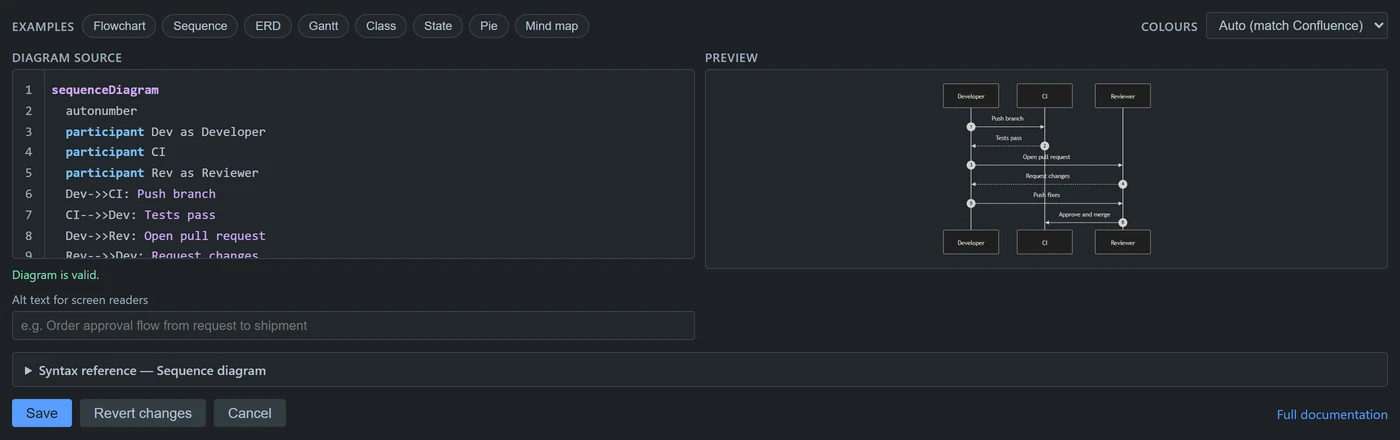
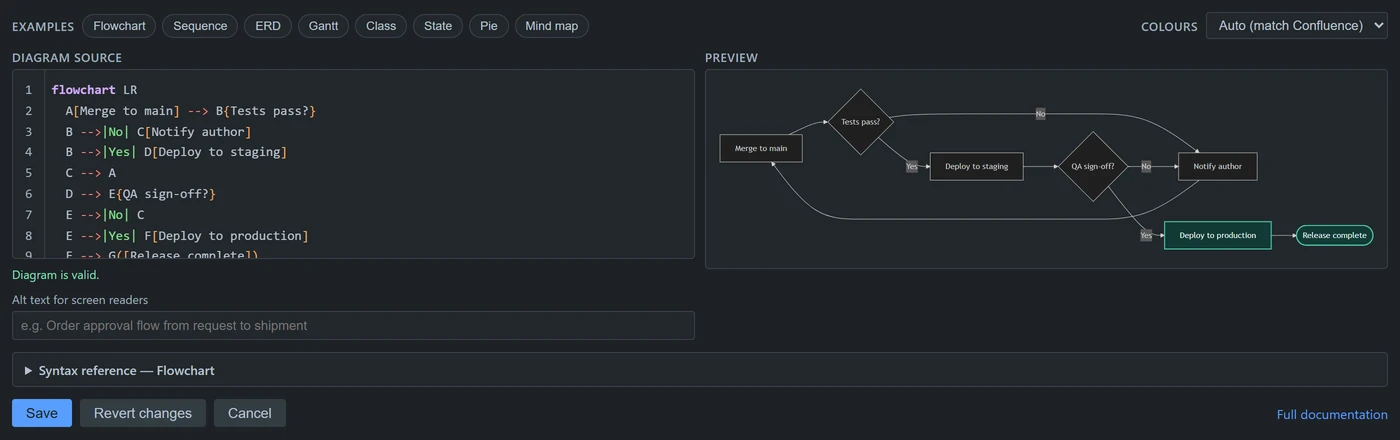
Mermaid Diagrams & Gantt for Confluence Write diagrams as text, see them render live.
Three apps. Two are on the Atlassian Marketplace, and the third is on its way there.
- Mermaid Diagrams & Gantt Write diagrams as text, see them render live. On the Atlassian Marketplace
- Recurring Requests & Templates Let portal customers repeat a request they have already raised — once, on a schedule, or from a saved template. On the Atlassian Marketplace
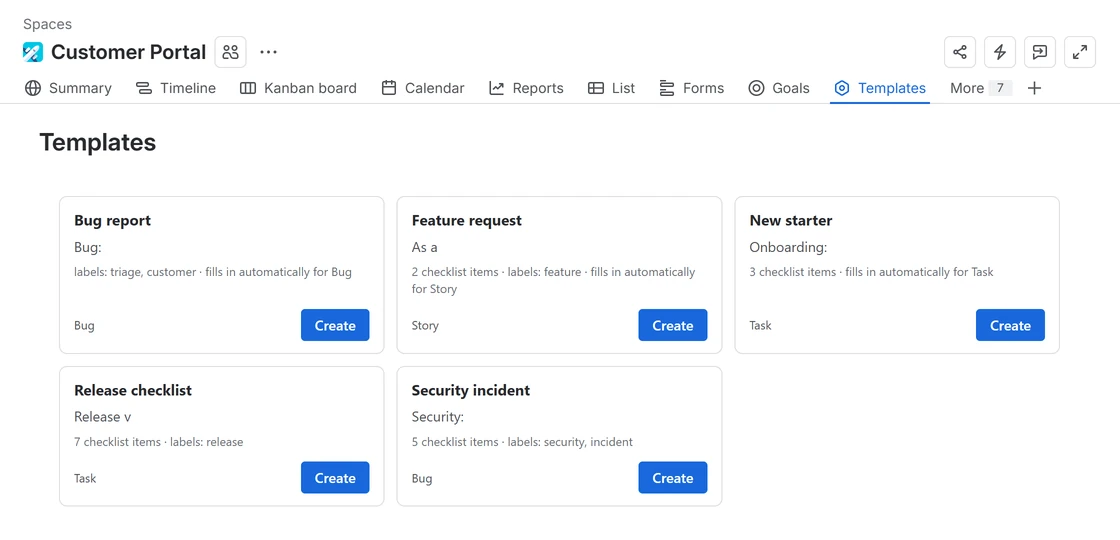
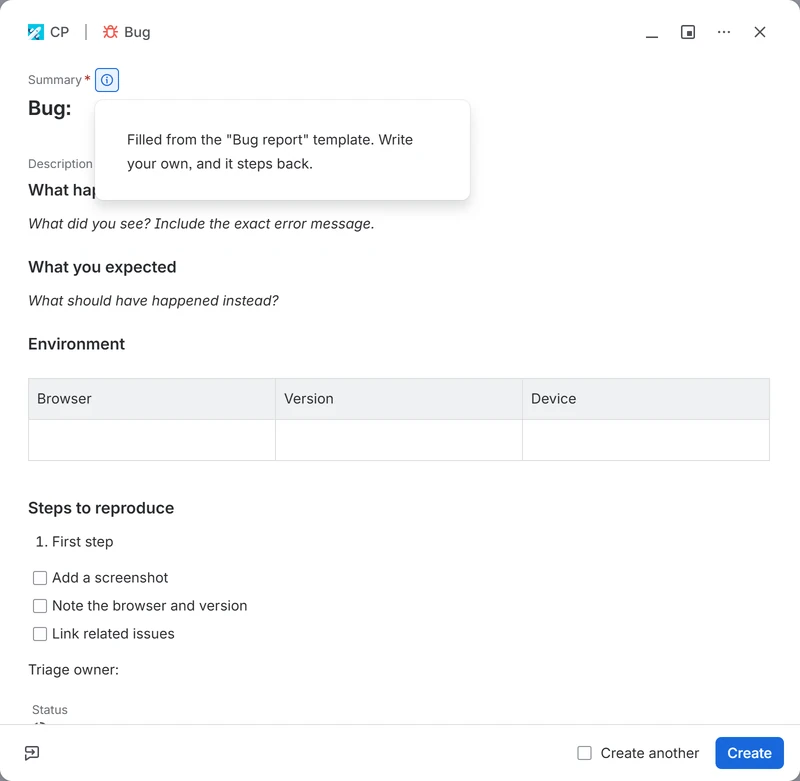
- Issue Templates & Create Defaults A default template for each issue type, filled into Jira's own Create dialog. Coming to the Atlassian Marketplace
Mermaid Diagrams & Gantt for Confluence
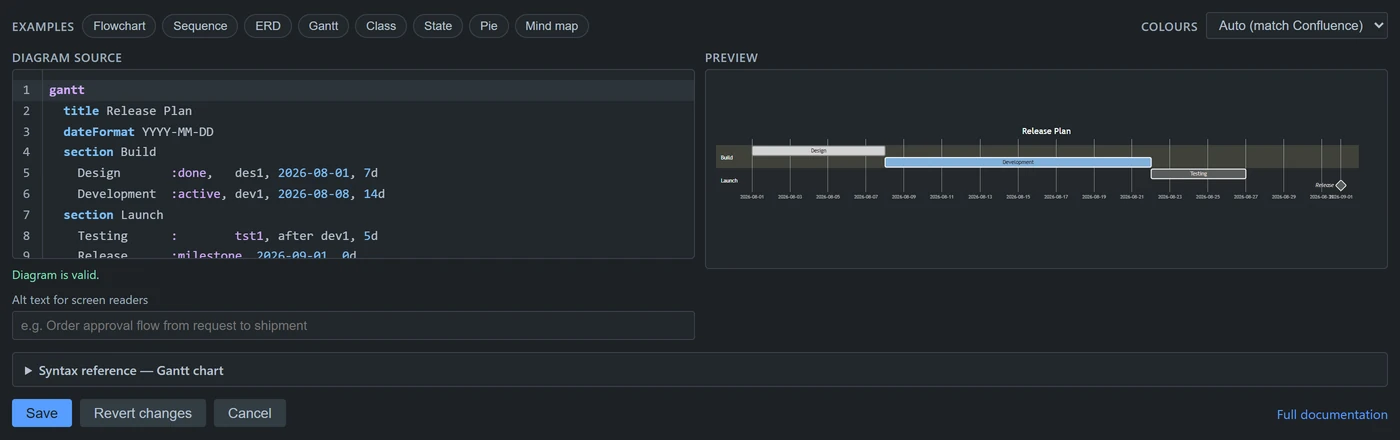
Write diagrams as text, see them render live.
Flowcharts, sequence diagrams, ERDs, Gantt charts and mind maps written as plain text — with syntax highlighting, live preview, starter examples and one-click export.
Formerly Mermaid Studio for Confluence.
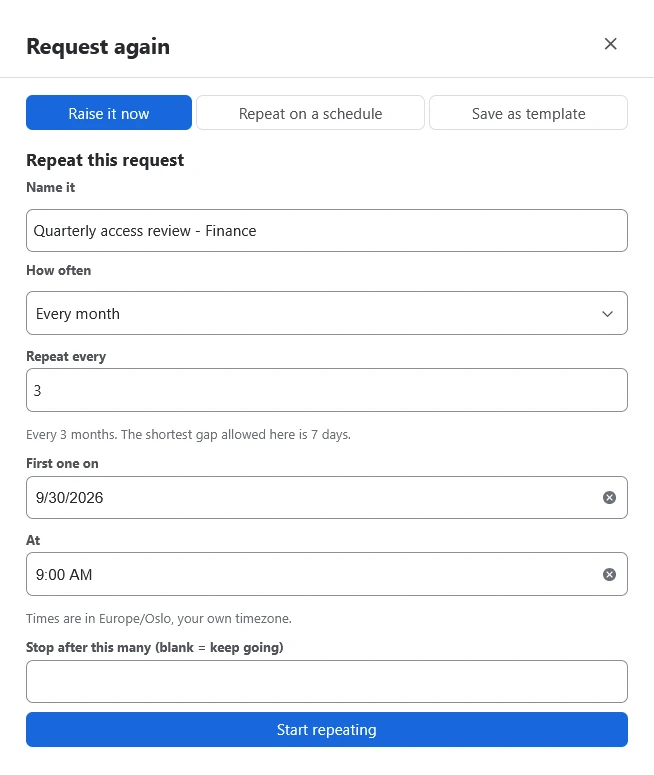
Recurring Requests & Templates for Jira Service Management
Some requests come back every month.
Let the customer schedule them instead of raising them by hand, forgetting, or emailing an agent to do it.
Issue Templates & Create Defaults for Jira
Nobody has to remember the format.
When every bug report should answer the same questions, give each issue type a template, and Jira's own Create dialog fills it in.
None of this needs to be taken on trust.
Every app here is defined by what it deliberately cannot do, which is why its claims are checkable rather than promised.
A promise not to misuse your data is worth less than not being able to reach it. Each of these is visible to you without our cooperation.
- Hosting
- Atlassian Forge. We operate no servers and hold no infrastructure of our own.
- Egress
- None declared. Nothing is sent outside Atlassian, to us or to anyone else.
- Permissions
- Listed on each app's page or the security page, and on the install screen before you approve it.
- Telemetry
- None in the apps. This website measures page views and load times with Cloudflare Web Analytics, which sets no cookies. Details
Most apps ask you to send your data somewhere.
A typical Marketplace app runs on its vendor's own infrastructure. Installing it means your issues, your customer requests and your page content are copied to a company you have not met, on hosting you did not choose, alongside sub-processors you would have to read a policy to name. None of that is unusual. It is simply how most of the ecosystem is built, and it is why every install turns into a review.
The data that cannot leak is the data that was never sent anywhere.
So nothing is sent.
Everything here runs on Atlassian Forge. Atlassian hosts the code, the data stays inside the tenancy you already administer, and the app declares no egress — there is no address for your content to travel to, including ours. That is not a policy we could quietly change. It is a property of where the software runs.
manifest.yml, read by Atlassian before the app runsread:servicedesk-request- Read the request the customer chose to repeat
write:servicedesk-request- Create the repeat, attributed to that customer
read:jira-work- Read the answers of an attached form
storage:app- Hold schedules, templates and settings, in storage Atlassian operates
report:personal-data- Report the account ids it stores each week, so data for closed accounts can be erased
- External permissions
- None declared No fetch, no images, no scripts, no addresses of any kind. Forge blocks any outbound call an app has not declared, and this app declares none — so there is nowhere for your content to go, including to us.
From the lab
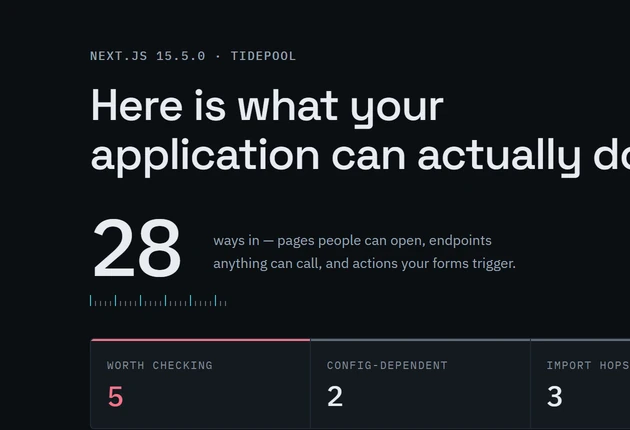
Labnpx what-it-does · free · MIT · runs on your machine
 Aion
Batch work for coding agents. Describe the job once. Run it over everything.
Produced22,451 chars
Reached the conversation315 chars
One forty-file review. 98.6% of what it produced never entered the context window — 64.7% aggregate across nine jobs.
Aion
Batch work for coding agents. Describe the job once. Run it over everything.
Produced22,451 chars
Reached the conversation315 chars
One forty-file review. 98.6% of what it produced never entered the context window — 64.7% aggregate across nine jobs.